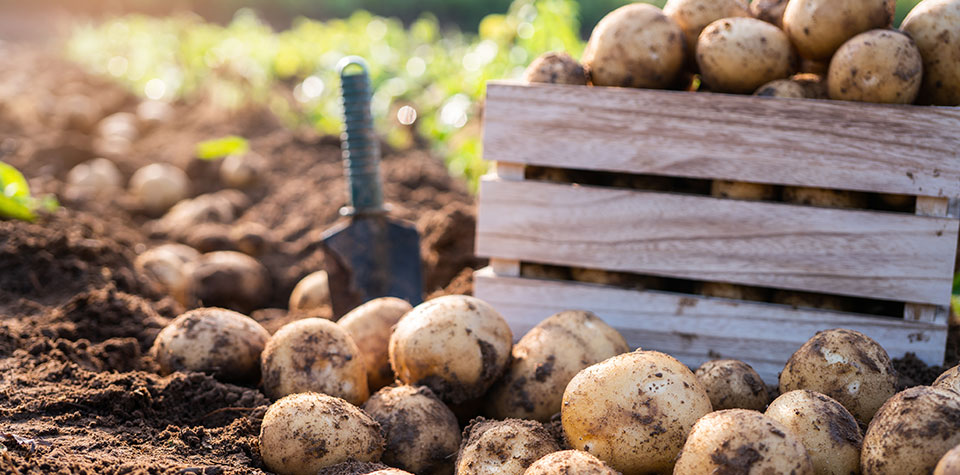
When rotating garden crops, avoid planting anything from the same family in the same location as the previous year, says K-State horticulture expert Cynthia Domenghini.
Rotating crops this fall can set garden up for success next spring
K-State horticulture expert suggests making a planting strategy
At a glance: Kansas State University horticulture expert Cynthia Domenghini says rotating crops in a garden is 'the best practice' to give plants a healthy start next spring.
More information: Cynthia Domenghini, Cdom@ksu.edu
Photo: Cynthia Domenghini
Related: K-State Horticulture Newsletter | Kansas Garden Guide
Sept. 12, 2024
By Pat Melgares, K-State Research and Extension news service
MANHATTAN, Kan. – This is the gardener’s mantra: Success requires planning.
“To give your plants a healthy start next year,” says Kansas State University horticulture expert Cynthia Domenghini, “the best practice is to rotate crops within the same family to a different location than where they’re growing this year.”
Crop rotation offers several benefits, according to Domenghini.
“Plants in the same family are typically susceptible to similar pests,” she said. “Some pests overwinter in the soil; some are able to survive on debris. If the same host is available when the pests emerge in the spring, they will be able to continue feeding, and multiply the problem. Crop rotation breaks the cycle of these pests.”
Domenghini added that plants in the same family also have similar nutrient requirements, so rotating crops prevents the soil from becoming depleted of those nutrients. “And, the varied root system depths from one plant family to the next contributes to the health of the soil,” she said.
“Now is the perfect time to make a map of the vegetable garden so you can switch things up when you plant next year,” Domenghini said. “For example, in the location where tomatoes are growing now, avoid planting anything from the Solanacaeae family (such as eggplant, pepper or potato) next year.”
Domenghini said a helpful table of common vegetable crop families and examples of how to rotate these crops is available online in the Kansas Garden Guide, published by the K-State Research and Extension bookstore.
Domenghini and her colleagues in K-State’s Department of Horticulture and Natural Resources produce a weekly Horticulture Newsletter with tips for maintaining home landscapes and gardens.
Interested persons can subscribe to the newsletter, as well as send their garden and yard-related questions to Domenghini at cdom@ksu.edu, or contact your local K-State Research and Extension office.
# # #
Sidebar: Question of the Week
What should I do with my ornamental sweet potatoes? Are their roots edible?
Ornamental sweet potatoes are prized for their foliage. The plants are bred for their aesthetic value, so although the roots are edible, they tend to be bitter. If you choose to consume them, cure for several days to increase the shelf-life and flavor.
Ornamental sweet potatoes are grown as annuals in Kansas, but can be overwintered by digging them just before the first frost, and storing until it’s safe to plant in the spring. Remove the above ground growth and keep the roots in moist compost, in a cool, dark room.
Alternately, the entire plant can be moved indoors and kept as a houseplant during the winter. Check the plant first for signs of disease or pests. Cut the vines back to about one foot and carefully transplant into the desired container. Keep the plant in an area with plenty of natural light until warmer weather returns in the spring.
 -- Cynthia Domenghini, K-State horticulture expert, Cdom@ksu.edu

K‑State Research and Extension is a short name for the Kansas State University Agricultural Experiment Station and Cooperative Extension Service, a program designed to generate and distribute useful knowledge for the well‑being of Kansans. Supported by county, state, federal and private funds, the program has county extension offices, experiment fields, area extension offices and regional research centers statewide. Its headquarters is on the K‑State campus in Manhattan. For more information, visit www.ksre.ksu.edu. K-State Research and Extension is an equal opportunity provider and employer.