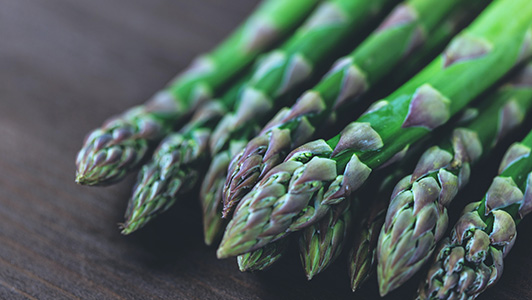
Asparagus is a perennial vegetable with three primary parts: the fluffy top is called the fern; the crown is the part just beneath the soil and the roots extend down from the crown.
Maintaining asparagus in the garden
K-State horticulture experts offer tips for fertilizing, weed control
March 23, 2023
By Maddy Rohr, K-State Research and Extension news service
MANHATTAN, Kan. — A Kansas State University horticulture expert said gardeners who want to promote asparagus spear growth this year should begin with removing old ferns.
Cynthia Domenghini, an instructor in K-State’s Department of Horticulture and Natural Resources, said asparagus spears begin emerging early to mid-April in Manhattan, but earlier in southern Kansas and later in northern Kansas.
“Asparagus is a perennial vegetable with three primary parts: the fluffy top is called the fern; the crown is the part just beneath the soil and the roots extend down from the crown,” Domenghini said. “Each spring new edible spears emerge from the crown.”
Domenghini recommends removing old ferns by hand, tilling, mowing or burning, using caution to not damage the crown.
Asparagus should be fertilized after harvest, based on a soil test, she said.
“The general recommendations are to apply one-to-two pounds of 10-20-10 or 11-15-11 fertilizer per 20 feet of row,” Domenghini said. “Most high nitrogen fertilizers such as a 30-4-5, 27-3-3 or something similar are lawn fertilizers but can be used for this crop as long as they don’t contain a weed preventer or killer. The should be applied at ½ pound per 20 feet of row.Water in the fertilizer application with ¼ inch of water.”
K-State horticulture expert Ward Upham said the best time to control weeds is before asparagus emerges in early spring.
“A light tilling that is shallow enough to avoid the crowns will eliminate existing weeds. Many gardeners like to mix in organic matter during the same operation,” he said.
Herbicides can be used before asparagus emerges also. Upham recommends using a glyphosate to kill weeds actively growing or mulch to keep weeds from invading.
“No herbicides can be used during harvest. The end of harvest presents another opportunity. Remove all fern and spears and apply glyphosate (Roundup) to control virtually all of the weeds present,” Upham said.
While options are limited after asparagus starts to regrow, products that contain sethoxydim can be applied to asparagus to kill annual grassy weeds such as crabgrass. Sethoxydim has no effect on broadleaves, including asparagus.
“Two sethoxydim products available to homeowners and labeled for asparagus are Monterey Grass Getter and Hi-Yield Grass Killer,” Upham said.
Upham and his colleagues in K-State's Department of Horticulture and Natural Resources produce a weekly Horticulture Newsletter with tips for maintaining home landscapes and gardens. The newsletter is available to view online or can be delivered by email each week.
Interested persons can also send their garden and yard-related questions to Upham at wupham@ksu.edu, or contact your local K-State Research and Extension office.