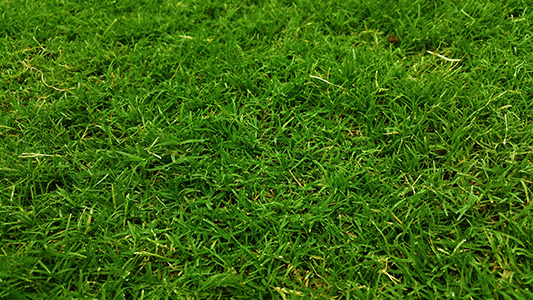
Healthy lawns need attention most months of the year. K-State horticulture expert Ward Upham publishes a monthly calendar for cool-season grasses.
Lawn calendar for cool-season grasses
K-State horticulture expert suggests maintenance regime for cool-season grasses
March 16, 2023
By Maddy Rohr, K-State Research and Extension news service
MANHATTAN, Kan. — As lawns begin to turn green, controlling weeds and applying fertilizer is important.
Cool-season grasses such as Kentucky bluegrass or tall fescue are among the most common cool-season grasses needing attention, said Kansas State University horticulture expert Ward Upham, who shares the following maintenance calendar:
March
Spot treat broadleaf weeds, if necessary. Treat on a day that is 50 degrees or warmer. Rain or irrigation within 24 hours of application will reduce effectiveness.
April
Apply crabgrass preventer when redbud trees are in full bloom, usually in April. The preventer needs to be watered in before it will start to work. One-quarter inch of water will be enough to water in any of the products commonly available. Remember that a good, thick lawn is the best weed prevention and may be all that is needed.
May
Fertilize the lawn with a slow-release fertilizer if you water your lawn or if you normally receive enough rainfall that your turf doesn’t go drought-dormant during the summer.
If there are broadleaf weeds, spot treat with a spray or use a fertilizer that includes a weed killer. Rain or irrigation within 24 hours of application will reduce effectiveness of the weed killer, but the fertilizer needs to be watered in. If you are using a product that has both fertilizer and weed killer, wait 24 hours after application before watering in.
If grubs have been a problem in the past, apply a product containing imidacloprid or chlorantraniliprole during May or anytime from May through June for imidacloprid. These products work to prevent grub damage. If rainfall does not occur within 24 hours, irrigate with ¼ inch of water.
June through Mid-July
Apply second round of crabgrass preventer by June 15 – unless you have used Dimension (dithiopyr) or Barricade (prodiamine) for the April application. These two products normally provide season-long control with a single application. Remember to water it in.
Late-July through August
If you see grub damage, apply a grub killer that contains Dylox. Imidacloprid and chlorantraniliprole are effective against young grubs but may not be effective on late instar grubs. The grub killer containing Dylox must be watered in within 24 hours or effectiveness drops.
September
Fertilize around Labor Day. This is the most important fertilization of the year. Water in the fertilizer if rainfall does not occur.
November
Fertilize. This fertilizer is taken up by the roots but is not used until the following spring. Water in fertilizer.
Spray for broadleaf weeds even if they are small. Broadleaf weeds are much easier to control in the fall than in the spring. Try to spray on a day that is at least 50 degrees. Rain or irrigation within 24 hours reduces effectiveness. Use label rates for all products.
Upham and his colleagues in K-State's Department of Horticulture and Natural Resources produce a weekly Horticulture Newsletter with tips for maintaining home landscapes and gardens. The newsletter is available to view online or can be delivered by email each week.
Interested persons can also send their garden and yard-related questions to Upham at wupham@ksu.edu, or contact your local K-State Research and Extension office.