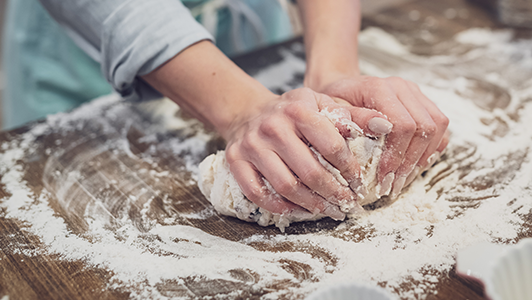
Flour is a minimally processed food that requires heat treatment to make it safe to consume, said K-State food scientist Karen Blakeslee.
Food scientist provides tips to prevent foodborne illness from raw flour
K-State's Blakeslee urges consumers to avoid eating raw dough or batter
May 3, 2023
By Maddy Rohr, K-State Research and Extension news service
MANHATTAN, Kan – After 11 states recently reported salmonella contamination in raw flour, a food safety recall was issued, reminding consumers that any raw product can contain foodborne illness bacteria.
Kansas State University food scientist Karen Blakeslee said an outbreak can result from consuming contaminated raw dough or batter.
“Flour comes from a plant, whether it is wheat, soy, oats, rice, or other,” Blakeslee said. “Therefore, it is exposed to environmental sources of naturally occurring microorganisms. It remains a raw product because there is no treatment during flour milling to change it to a ready-to-eat food.”
Flour is a minimally processed food that requires heat treatment to make it safe to consume. That happens when it is used in cooking and baking.
“Despite what is found on the internet, there is no validated method to heat treat flour at home. Commercially heat-treated flour is available, primarily to the food industry,” Blakeslee said.
The best ways to prevent illness from raw flour include:
- Follow cooking and baking directions to safely cook or bake foods.
- Keep raw flour away from ready-to-eat foods.
- Clean equipment and surfaces after handling raw flour.
- Always wash your hands after handling raw flour.
- Do not eat or play with raw dough.
- Do not use raw cookie dough in ice cream.
- Do not keep raw flour that has been recalled.
Blakeslee, who is also coordinator of K-State’s Rapid Response Center for food science, publishes a monthly newsletter called You Asked It! that provides numerous tips on being safe and healthy. More information also is available from local extension offices in Kansas.