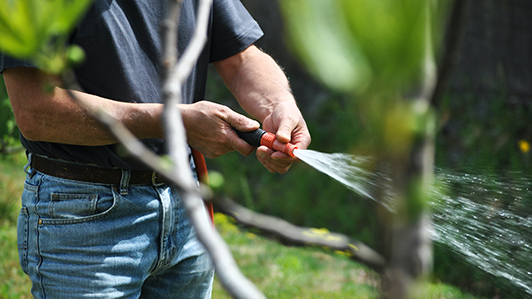
The efficacy of glyphosate herbicide depends on the quality of water it is mixed with, says K-State horticulture instructor Cynthia Domenghini
In the Garden: Maximizing the effectiveness of glyphosate
K-State horticulture expert shares tips for using common herbicide
May 25, 2023
By Maddy Rohr, K-State Research and Extension news service
MANHATTAN, Kan. — Roundup, Killzall, Pronto Weed and Grass Killer are all glyphosate herbicides used to kill unwanted plants. Kansas State University horticulture instructor Cynthia Domenghini said the efficacy of this herbicide depends on the quality of water it is mixed with.
“Water hardness is a measure of how much salt is in the water, whereas harder water indicates higher salt content,” Domenghini said. “Positively charged calcium and magnesium salts are particularly problematic because they can bind with the negatively charged glyphosate molecules. This inhibits plants from absorbing the glyphosate.”
Domenghini said ammonium sulfate is negatively charged and can bind to hard water ions if added to the spray tank before the glyphosate.
“This allows the glyphosate to work as intended and may even increase efficacy of weed control as the herbicide may be absorbed more readily by weeds,” she said.
Domenghini said adding ammonium sulfate to soft water is not helpful. She recommends testing water to determine the level of hardness.
“If your water is above 120 parts-per-million, it is at a level that could benefit from including ammonium sulfate in glyphosate mixes. In general, add 8.5 pounds of ammonium sulfate per 100 gallons of water (1.4 ounces per gallon; 4 tablespoons per gallon),” she said.
Domenghini and her colleagues in K-State's Department of Horticulture and Natural Resources produce a weekly Horticulture Newsletter with tips for maintaining home landscapes and gardens. The newsletter is available to view online or can be delivered by email each week.
Interested persons can also send their garden and yard-related questions to Domenghini at cdom@ksu.edu, or contact your local K-State Research and Extension office.