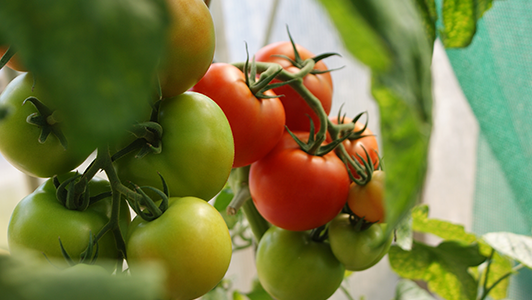
K-State horticulture instructor Cynthia Domenghini recommends tomato cages to be about two feet in diameter for proper containment.
Tips for durable tomato cages
K-State horticulture expert suggests concrete reinforcing mesh wire for tomato cages
May 18, 2023
By Maddy Rohr, K-State Research and Extension news service
MANHATTAN, Kan. — Productive tomato plants and Kansas growing conditions require tomato cages for support, said Kansas State University horticulture instructor Cynthia Domenghini.
“The mesh is typically sold in 50-foot-long rolls that are five feet high. The mesh has six inch squares that accommodate access to the tomato plants for harvest, inspection or other care,” Domenghini said.
She recommends each cage be about two feet in diameter for proper containment.
Domenghini said the steps to create tomato cages from mesh are simple:
- Roll the mesh onto the ground and count 13 squares.
- Using small bolt or standard wire cutters, cut the wire at the end of the 13th square leaving intact 12 squares.
- Allow the mesh to form a cylinder and wrap the cut pieces of the final squares around the first squares to hold the shape.
“Adjust the height of the cage by cutting entire squares, if desired, depending on the type of tomatoes you are growing,” Domenghini said.
She said cutting the wire at the base of the cylinder will create prongs that can extend into the ground when placed around the tomato plant.
“This will provide some security for the cage. For additional support, drive a T-post into the ground next to the cage and tie the cage to it,” she said.
These sturdy cages will last multiple years but are bulky and require extra storage space.
Domenghini and her colleagues in K-State's Department of Horticulture and Natural Resources produce a weekly Horticulture Newsletter with tips for maintaining home landscapes and gardens. The newsletter is available to view online or can be delivered by email each week.
Interested persons can also send their garden and yard-related questions to Domenghini at cdom@ksu.edu, or contact your local K-State Research and Extension office.