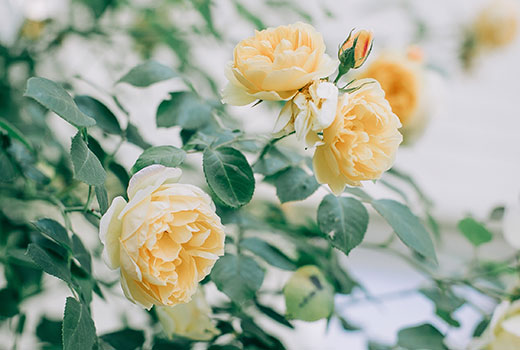
Rose bushes may be susceptible to the bristly rose slug, which may make the leaves turn brown.
Watch for bristly rose slugs on rose bushes this summer
Slugs typically over-winter on leaves, says K-State horticulture expert
June 1, 2023
K-State Research and Extension news service
MANHATTAN Kan. -- It’s no secret that gardeners battle with insects in their flower gardens every year.
In rose gardens, the bristly rose slug can be a nemesis, often leaving gardeners confused as to why their roses have brown leaves. Kansas State University horticulture expert Ward Upham said the slug has been feeding on rose leaves in different parts of Kansas, most prominently in the Kansas City area.
Bristly rose slugs are larvae of rose sawflies. The sawflies lay their eggs by making tears in rose leaves and placing individual eggs. The larvae are a yellow-greenish color and have an orange head.
Upham said the slugs are covered in hairs that resemble bristles. The rose slugs typically overwinter as pupae, an inactive immature form of insect in between larva and adult. In Kansas, there is commonly one generation per year. Upham said that the larvae are about a half inch in size.
Upham said that the larvae leave a clear film after they consume the green layer of the leaf. The rose slugs eat the bottom side of rose leaves and leave the roses with a skeleton like appearance. After a while, they can carve notches into the margins in the leaves.
“This is known as window feeding. As the larvae mature, they make holes in the leaf and eventually may consume all of the leaf but the major veins.” Upham said.
No matter the size of infestation, Upham said there are multiple ways to successfully remove the insects from your roses.
One way to remove the rose slugs without harming the plant is to hand remove the insects and place them in a container with soapy water. Upham said one thing to keep in mind while picking out a treatment is that there are different solutions for the bristly rose slugs and true caterpillars.
“Since bristly rose slugs are not caterpillars,” Upham said, “BT, found in Dipel and Thuricide, will not be an effective treatment.”
Upham suggests a strong jet of water to remove the insects from the plant, making it very difficult for them to find the plant again. There are other treatments such as horticultural oils, insecticidal soap and spinosad that may also be effective.
Upham and his colleagues in K-State's Department of Horticulture and Natural Resources produce a weekly Horticulture Newsletter with tips for maintaining home landscapes and gardens.
The newsletter is available to view online or can be delivered by email each week.
Interested persons can also send their garden- and yard-related questions to Upham at wupham@ksu.edu, or contact your local K-State Research and Extension office.