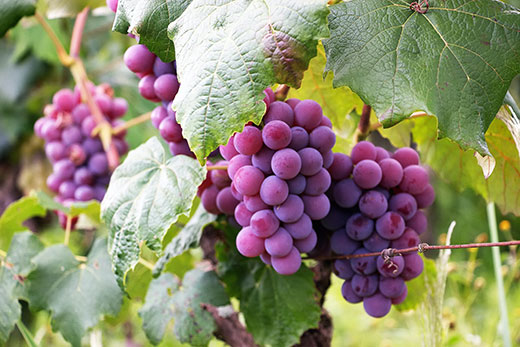
Harvesting grapes based on color only could leave a bitter taste in your mouth, says K-State horticulture expert Cynthia Domenghini.
Wait on grapes in the garden, says K-State horticulture expert
Grapes should not be harvested based on color
July 27, 2023
By Maddy Rohr, K-State Research and Extension news service
MANHATTAN, Kan. — Waiting for grapes to ripen takes patience because the color matures before the fruit, said Kansas State University horticulture expert Cynthia Domenghini.
“Harvesting based on color alone will likely leave a bitter taste in your mouth as it takes several more weeks for the sugars to reach their peak and the tartness to subside,” Domenghini said.
Grapes don’t continue to ripen after harvest like some fruits, so waiting is important. Domenghini said ripeness is indicated by a white coating as well as being slightly less firm than unripe fruit.
“Open one of the grapes and observe the seed color. Seeds of ripe grapes often change from green to brown,” Domenghini says.
If all other measures indicate the grapes are ripe, do a taste test to make the determination, she adds.
Domenghini and her colleagues in K-State's Department of Horticulture and Natural Resources produce a weekly Horticulture Newsletter with tips for maintaining home landscapes and gardens. The newsletter is available to view online or can be delivered by email each week.
Interested persons can also send their garden and yard-related questions to
Domenghini at cdom@ksu.edu, or contact your local K-State Research and Extension office.