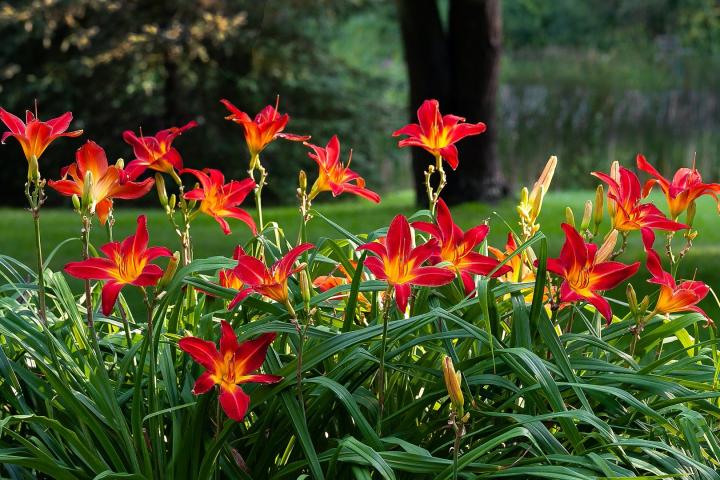
Daylilies need to be divided every 3-4 years to maintain good flower production, says K-State horticulture expert Ward Upham.
September to-do list: Divide daylilies
K-State’s Upham says proper care will increase flower production later on
Aug. 18, 2023
MANHATTAN, Kan. —With fall approaching fast, home gardeners should start thinking about daylilies – particularly prepping them for next year.
Kansas State University horticulture expert Ward Upham said daylilies need to be divided every 3-4 years to maintain good flower production.
He said some gardeners may divide their daylilies in the spring before they start growing, but it is more common to divide them in September. To make daylilies easier to handle before dividing, Upham suggests cutting back the tops to about half their original height.
“Daylilies have a very tough root system that can make them difficult to divide while in place,” Upham said. “Dividing in place is practical if it hasn’t been long since the last division.”
If this is the case, using a spading fork to peel the fans from the existing clump is best. Upham said that if the plants have been in place for a long period of time and are well grown together, it is more practical to divide them after the clump has been dug out.
He said it is possible to cut the clump apart using a sharp spade, but you will save more roots using two spading forks back-to-back to divide the clump into sections. Each section should be about the size of a head of cauliflower.
“An easier method involves using a stream of water from a garden hose to wash the soil from the clump, and then rolling the clump back and forth until the individual divisions separate,” Upham said.
Once divided, space each section 24-30 inches apart, and set each at its original depth. “The number of flowers will be reduced the first year after division but will return to normal until the plants need to be divided again,” Upham said.
Upham and his colleagues in K-State’s Department of Horticulture and Natural Resources produce a weekly Horticulture Newsletter with tips for maintaining home landscapes. The newsletter is available to view online or can be delivered by email each week.
Interested persons can also send their garden- and yard-related questions to Upham at wupham@ksu.edu, or contact your local K-State Research and Extension office.