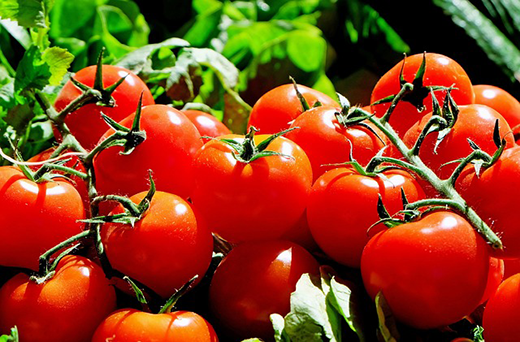
As gardeners bring in another year's harvest of tomatoes, K-State horticulture expert Cynthia Domenghini urges them to be aware of the fungal disease, anthracnose.
Be aware of anthracnose in tomatoes
Circular lesions are sign of fungal disease, says K-State horticulture expert
Aug. 24, 2023
By Maddy Rohr, K-State Research and Extension news service
MANHATTAN, Kan. — As reports of anthracnose increase, Kansas State University horticulture expert Cynthia Domenghini says knowing how to prevent the fungal disease is a high priority for gardeners.
"High humidity and frequent rainfall favor the development of the fungal disease, anthracnose,” Domenghini said. “Most often seen in the later part of the growing season on ripe fruit, anthracnose reduces the quality and yield of the tomato harvest.”
Symptoms begin as small, circular lesions on the surface of the fruit, Domenghini said. The sunken lesions give a water-soaked appearance beneath the skin of the fruit.
“At the center of the lesions are black rings which are small fruiting structures known as acervuli. This is the disease-causing fungus,” Domenghini said.
As lesions grow, they can join and cause the fruit to decay, which promotes microorganisms to invade and rot the fruit entirely.
Anthracnose spores survive in plant debris and soil causing spores to get splashed onto fruit during heavy rain or even with overhead watering.
“Proper cultural practices can prevent this by using mulch over the soil around the tomato plants and removing plant debris from the ground,” said Domenghini, who also suggests promoting air flow to reduce humid conditions by staking the tomato plants.
“Use drip irrigation or a soaker hose to prevent splashing spores onto plants,” she said.
Domenghini also recommends using chlorothalonil, which has a zero day waiting period from application to harvest. Products that contain chlorothalonil include, but are not limited to, Fertilome Broad Spectrum Landscape & Garden Fungicide; Ortho Garden Disease Control; Bonide Fungonil Concentrate; Hi-Yield Vegetable, Flower, Fruit and Ornamental Fungicide; and GardenTech Daconil.
Domenghini and her colleagues in K-State's Department of Horticulture and Natural Resources produce a weekly Horticulture Newsletter with tips for maintaining home landscapes and gardens. The newsletter is available to view online or can be delivered by email each week.
Interested persons can also send their garden and yard-related questions to Domenghini at cdom@ksu.edu, or contact your local K-State Research and Extension office.
Product names listed in this article are intended for identification purposes only and do not indicate an endorsement of these products by Kansas State University.