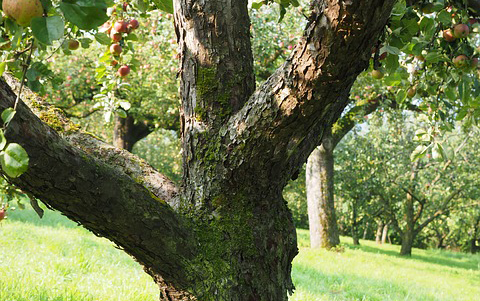
Mice like to take refuge in and around fruit trees during the winter months. K-State horticulture expert Cynthia Domengini shares tips for preventing damage to trees caused by mice.
K-State expert: Take steps to protect fruit trees from mice
Clear debris around trees to reduce presence of critters, says Domenghini
Dec. 7, 2023
By Maddy Rohr, K-State Research and Extension news service
MANHATTAN, Kan. — Fruit tree bark is a tasty alternative – and often favorite -- food source for mice in the winter.
Ah, rats…
Kansas State University horticulture expert Cynthia Domenghini said mice chew through the outer layer of bark at the base of trees. “Heavy feeding reduces the trees’ ability to transport food to the roots and can result in death,” she said.
To prevent damage from mice, start by keeping the ground around trees clear of debris.
“This removes the protective layer mice are seeking to stay hidden from predators. Weeds, leaves and grass should all be maintained,” Domenghini said. “Even mulch can create a hideout for small rodents.”
Domenghini suggests wrapping the base of the trunks with hardware cloth at least 18-inches high. Mice will not be able to access the bark through this material. Be sure to remove the wire during the active growing season to prevent damaging the trunk as it grows.
In some situations, Domenghini said a baited trap may be the best route to avoid losing fruit trees. Bait stations can easily be made to ensure only the intended pests are accessing the bait.
“Use extreme caution when handling the bait and follow proper procedures to keep pets, children and others safe,” Domenghini said.
Monitor fruit trees regularly for signs of damage to the trunk. Damage can be more than an aesthetic problem if not remedied quickly, she warned.
Domenghini and her colleagues in K-State's Department of Horticulture and Natural Resources produce a weekly Horticulture Newsletter with tips for maintaining home landscapes and gardens. The newsletter is available to view online or can be delivered by email each week.
Interested persons can also send their garden and yard-related questions to Domenghini at cdom@ksu.edu, or contact your local K-State Research and Extension office.